Multinational Strategy Definition & Example
Harvey Feriors
Editor
Published
Modified
Harvey Feriors
Editor
Published
Modified

The multinational strategy is a strategy by which a company operates as stand-alone business units in multiple countries to optimize the products or services based on the preferences of local customers and competitive conditions to gain a competitive advantage. A multinational strategy, also known as multidomestic strategy.
A multinational strategy uses subsidiaries in each host country in which the company does business to respond to local conditions. Each local subsidiary has its own function that is required for operating in the host country such as manufacturing, R&D, human resources, and marketing functions. Thus each multinational subsidiary can customize the products and strategies independently based on the preferences of local customers and competitive conditions.
A good example of a multinational firm is the MTV tv show which customizes the show based on the countries, including South Korea, India, New Zealand, and Portugal. Instead of trying to use American MTV for viewers around the world.
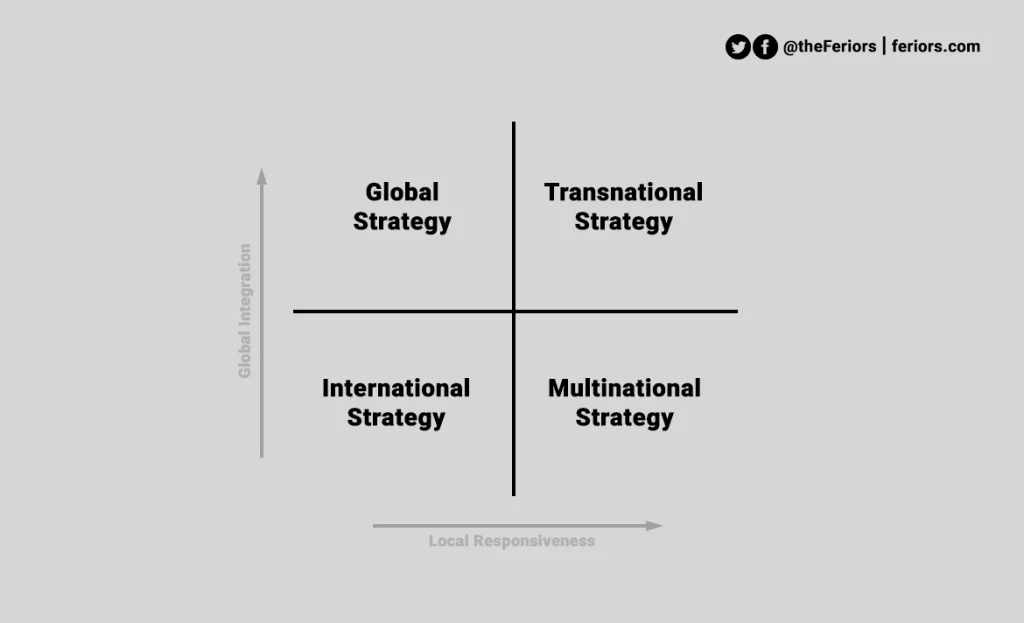
According to the Bartlett & Ghoshal matrix, compared with another remaining global integration model, the multinational strategy is the least pressure for global integration but highly adapting to local conditions for the competitive advantages.
The advantages of using a multinational strategy are the benefit of strong local autonomy includes the following advantages:
However, the major disadvantage of the multinational strategy is higher manufacturing costs and duplication of effort in each subsidiary.
The multinational strategy is a strategy by which a company operates as stand-alone business units in multiple countries to optimize the products or services based on the preferences of local customers and competitive conditions to gain a competitive advantage.
A good example of a multinational firm is the MTV tv show which customizes the show based on the countries, including South Korea, India, New Zealand, and Portugal. Instead of trying to use American MTV for viewers around the world.
Multinational subsidiaries can customize the products and strategies based on the preferences of local customers and competitive conditions.